UK version, Templar, September 2014
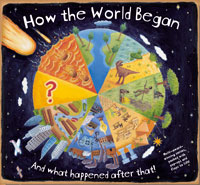
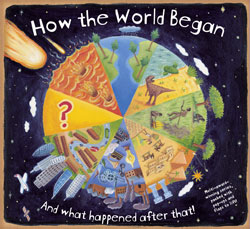
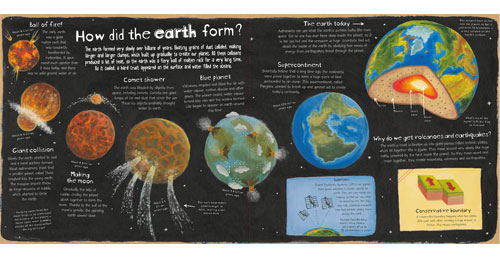
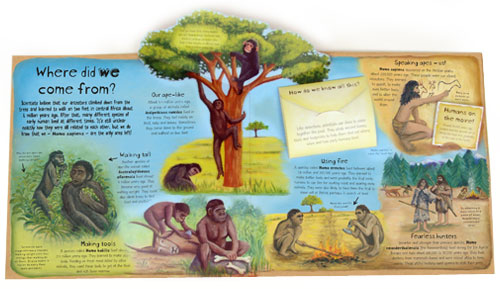
How did the universe begin? Where did humans come from? Why did Darwin cause such a commotion? And how did the Romans conquer the world? Through the use of pop-ups, flaps and booklets, ‘How the World Began’ is an exploration of the history of our planet, from the birth of the universe to ancient civilisations, the present and even the future of the earth.
Age 7 to 12
Scroll down to see more spreads from the book
“#Review#”
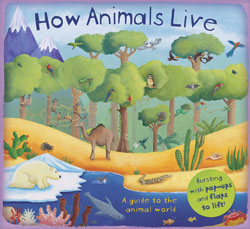
UK version, Templar, October 2013
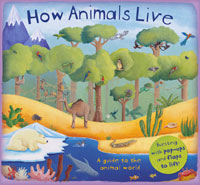
Why is the rainforest so popular? How do polar bears keep warm? Which creature is so tough it has survived in outer space? Answering these questions and many more, ‘How Animals Live’ takes children on a world tour to find out how animals have cleverly adapted to life, from the freezing poles to the hottest, driest deserts.
Age 7 to 12
Scroll down to see more spreads from the book
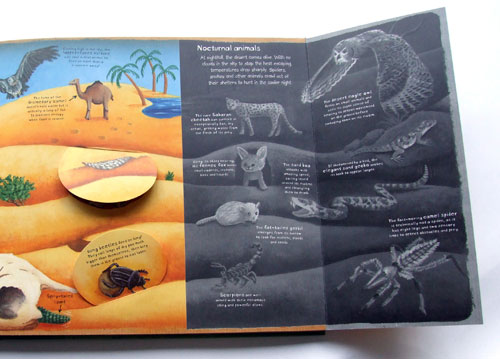
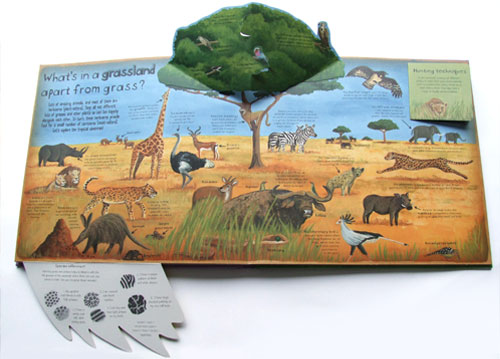
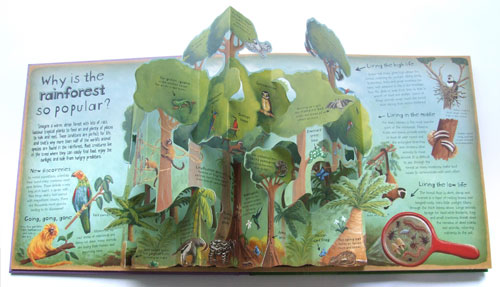
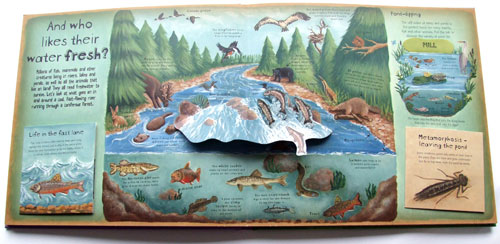
“Dorion’s latest book, How Animals Live – shortlisted for the prestigious Royal Society 2014 Young People’s Book Prize – looks at how animals have adapted to life all over the planet. (…) Unlike many kids’ books about animals that describe species individually, Dorion’s books portray habitats as interdependent systems.” Read more
OZY media, 30 July 2014
“We love this pop-up book showing a range of different habitats and the animals that live in them. Beautifully presented, this is a lovely introduction to ecosystems around the planet.”
Shortlisting panel from the Royal Society, May 2014
“This is an absolutely stunning book, full of vivid illustrations and exciting pop-ups and flaps to lift, this will delight children and adults alike. It is full of fascinating facts and information, a brilliant example of what Templar Publishing does best. Our junior reviewers loved it! Highly Recommended!”
Hot Brands Cool Places, the online luxury lifestyle magazine
UK version, Templar, August 2012
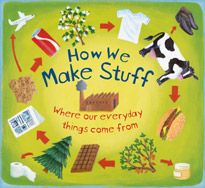
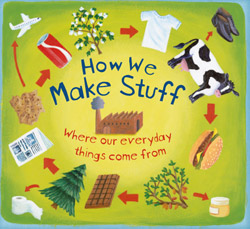
Where do our clothes come from? What are rubber ducks made of? What's the link between gorillas and mobile phones? Does chocolate grow on trees? Answering these questions and many more, ‘How We Make Stuff’ is an engaging exploration of the way we design, produce and dispose of everyday products. ‘How We Make Stuff’ has been translated into 8 languages.
Age 7 to 11
Winner of the English Picture Book Award, non-fiction 7-11
Can we do things differently? Working in collaboration with the Ellen MacArthur Foundation, we have developed a website for parents and primary teachers to encourage children to explore further how we can learn from living systems and rethink the way we make our stuff.
Have fun exploring at www.made2bmadeagain.org !
Scroll down to see more spreads from the book
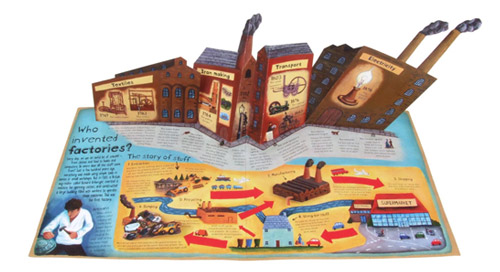
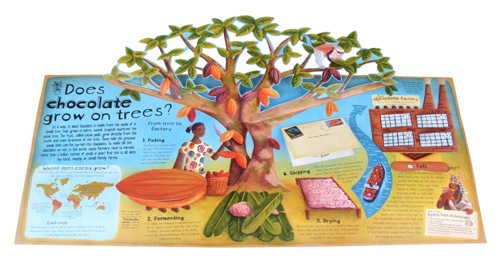
“How We Make Stuff is an engaging and educational exploration of how we design, produce and dispose of everyday products such as t-shirts, mobile phones and burgers”
The Guardian Online, 2 July 2013. Read more
“A book from the same author/ illustrator combination that brought award success and recognition for 'How the World Works', 'How We Make Stuff' has the same appeal, combining engaging presentation with flaps and pulls; it is the sort of book that surprises and has the reader desperate to share some interesting nugget - Guess why we say, 'As mad as a hatter!'. Thought provokingly written, it transmits powerful messages about the environment without preaching. One can well imagine a huddle of heads in a book corner, poring over this book, fascinated and transfixed!”
English 4-11 Picture Book Awards 2013 Review, English Association
“The latest in the How It Works series traces the journey that natural resources take as they are transformed into food, clothes, phones and ‘things’. By revealing, say, that a cheeseburger can involve combined efforts from four continents, Christiane Dorion and Beverley Young could inspire thinking about the planetary impact of our need for stuff.”
Nature, 6 December 2012, vol. 492
“Playful, creative and educational, ‘How we make stuff’ offers a hands-on introduction to circular economy principles and packs many real-life examples to which young readers can relate. Author Christiane Dorion and illustrator Beverley Young have created a very entertaining and informative pop-up book, which opens readers to the exciting possibilities of the future!"
Dame Ellen MacArthur, The Ellen MacArthur Foundation
“Up-to-date in both content and in terms of its strong messages on sustainability and the future of design, this book will inform as well as providing an inspiring challenge for new generations of engineers and designers to take up.”
Booktrust
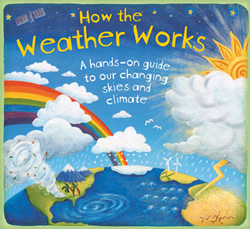
UK version, Templar, January 2011
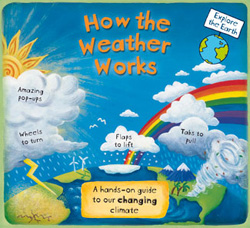
US version, Candlewick, February 2011
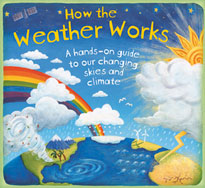
What is a tornado? Why does it snow? Why do hurricanes happen? What’s the difference between weather and climate? Tackling both normal and extreme scenarios, this pop-up book, second in the series, explores the world’s scorching, stormy, sensational weather. It also encourages children to think about whether human activities can influence the earth’s climate. 'How the Weather Works' has been translated into 8 languages.
Age 7 to 12
Shortlisted for the 2013 ALCS Award for Educational Writing.
Shortlisted for the Royal Society Young People's Book Prize 2012.
Winner of the 2012 American Meteorological Society's Louis J. Battan Author's award - K-12.
Selected for the 2012 Indiana Science Tradebook Annual Reading List (INSTAR) for the teaching of science in primary schools.
Scroll down to see more spreads from the book
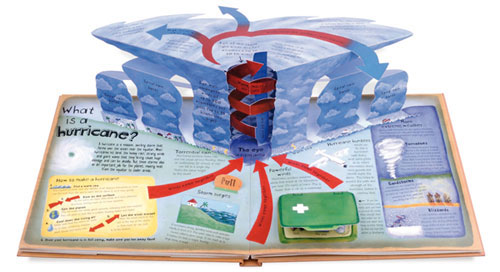
“A colourful yet subtly illustrated picture book, commented the judges, which explains how the weather works in a simple and fun manner, making this a fascinating read for children who live in a land of ever-changing climatic
conditions! The drawings are informative and carefully-labelled, and the paper engineering elements –notably the pop-up hurricane - add to the book, rather than being merely gimmicks.”
Judges for the 2013 ALCS Award for Educational Writing
“We loved this beautiful and imaginative book, which uses pop-ups to explore an unusual subject – how the weather works. We particularly liked the way that the pop-ups aren’t just there for decoration, but are thoughtfully used to explain the science behind the weather.”
Shortlisting panel from the Royal Society, May 2012
"Uniquely interactive and visually stimulating, their stunning and informative book, "How the Weather Works: A hands-on guide to our changing climate”, engages readers of all ages in a variety of atmospheric science topics."
American Meteorological Society
". . . easy to follow written explanations, absorbing colourful pages and interactive experiences … This is a visually exciting book and can entertain as well as inform the young reader."
Carousel Magazine
"With so much to look at, examine and move, readers never get bogged down by complexity and are able to visualize weather as a dynamic force… This is the kind of books that makes open discussions possible. It isn’t hammering one position or another, but trying to inform children, so that they become part of the bigger discussion on global warming and make up their own minds about what needs to be done."
wherethebestbooksare.blogspot.com
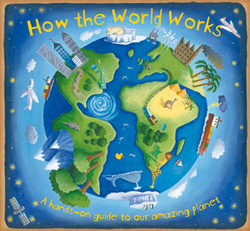
UK version, Templar, February 2010
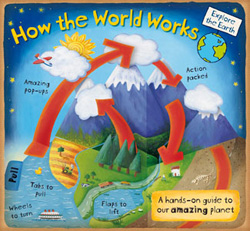
US version, Candlewick, February 2010
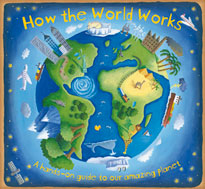
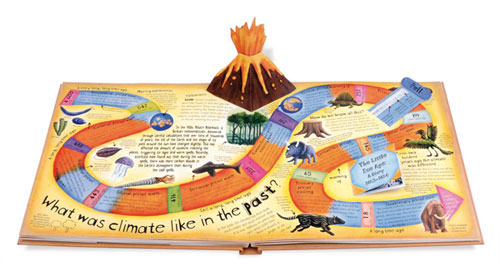
When did life begin? Is the earth moving beneath our feet? Why does the sea move? What is a carbon footprint? Encompassing all of these questions and many more, this pop-up book introduces the earth’s important cycles and offers an exciting way to learn geography and science. It also encourages children to think for themselves about the impact of human actions on our world. 'How the World Works’ has been translated into 14 languages.
Age 7 to 14.
Winner of the Royal Society Young People's Book Prize 2011.
Shortlisted for the 2011 Blue Peter Award in the ‘Best book with facts’ category.
Shortlisted for the SLA Information Book Award 2011.
Winner of the 2010 Scholastic Education Best Books competition in the non- fiction category.
Scroll down to see more spreads from the book
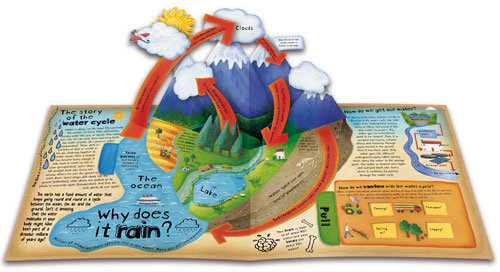
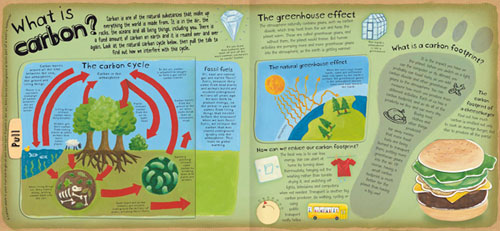
"We loved the way this book uses stunning pop-ups and other mechanisms to explain the science of the Earth - covering everything from the hydrological cycle to plate tectonics."
Read more
Shortlisting panel from the Royal Society, December 2011
"There is a TON of information and brilliant pop ups and pull outs!" (Christopher, aged 13).
"I couldn't wait to open this book, my friend Amy couldn't stop talking about how great it is; and I agree! It uses lots of scientific language and illustrations to explain all the interesting topics. I thoroughly enjoyed reading this book and learnt so much! Bonus!” (Rosie, aged 12). "A wonderful hands-on scientific adventure, waiting to be explored" (Megan, aged 13). "This was the best book ever, you cannot beat it!” (Jordan, aged 10).
Young judges from the Royal Society judging panel, December 2011
"Like an intriguing scrapbook, this title lures the reader into pages that present
facts about the Earth, water, weather and life with various clever items of
paper engineering.”
Huw Thomas, Headteacher, Scholastic, Autumn term 2010
"How the World Works is not only ambitious but also remarkably successful.
… this is an appealing book containing fundamental knowledge about the
world to which every child should have access..." Read more
Nick Trench, Geographical, Royal Geographical Society, April 2010
"The visual explanations in How the World Works are wide-ranging and
impressive, covering what truly governs our days: sunlight, fresh water,
winds and other key components. (…) Although the clear and informative text
carries a pro-environmental message, it stays clear of preachiness. The facts
are what jump out at you."
Abby McGanny,
The Washington Post, March 2010
"A fabulous interactive novelty book that enables hands-on exploration of our
planet."
Fiona Noble, The Bookseller
"This beautiful book is the very best educational tool for children I have ever come across. The interactive pop out illustrations are very clever and the information is well written and engaging."
Customer’s review, Amazon
Walker Studio, February 2020
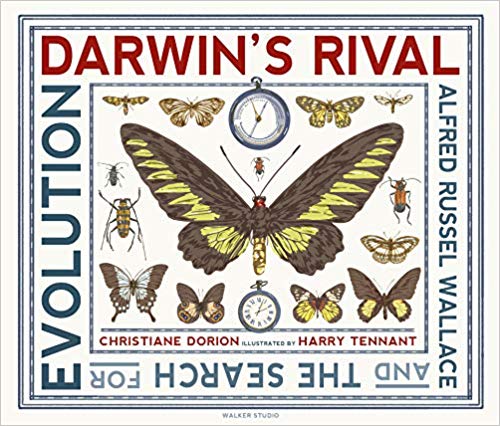
Follow Victorian naturalist and explorer Alfred Russel Wallace on his epic journeys around the globe and find out how he discovered the theory of evolution by natural selection, independently of Charles Darwin. Darwin's Rival traces Wallace’s life from his childhood in the Welsh countryside to becoming one of the world’s most famous scientists, via dense tropical jungles and perilous sea journeys. With evocative illustrations by Harry Tennant, this book, for children and adults alike, introduces the man so often eclipsed by his contemporary and friend Charles Darwin.
Age 10 +
Bloomsbury, November 2019 (in partnership with the Woodland Trust)
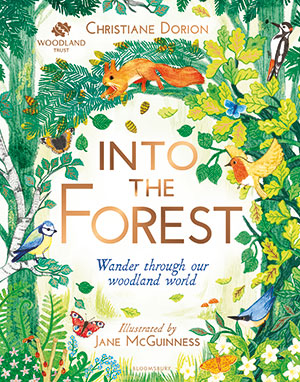
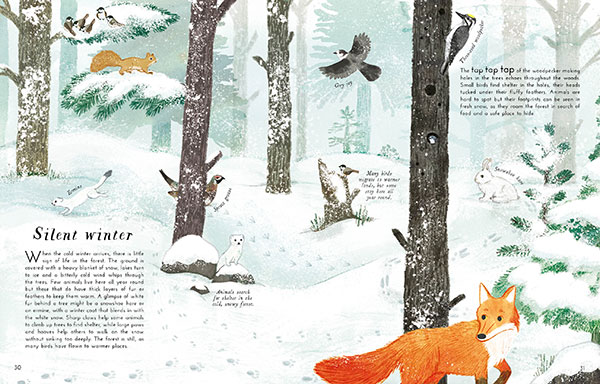
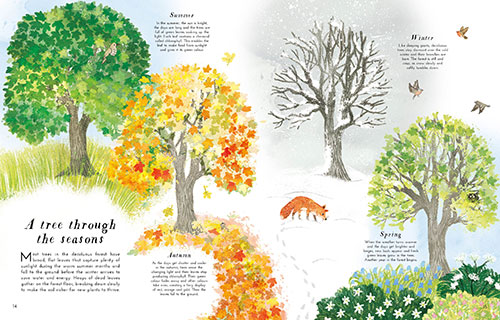
Step into the forest … From leafy oak and maple trees to humid and warm tropical rainforests, this is an introduction to the beauty of forests around the world. Marvel at the peaceful twilight of the deciduous forest, where birds gather twigs and bats shelter in tree trunks. Spot a spectacular bald eagle soaring through the towering redwood trees and imagine listening to a symphony of sounds in the Amazon rainforest.
Age 7 to 12
Scroll down to see more spreads from the book

UK version, Templar, 2016
US version, Candlewick, 2016
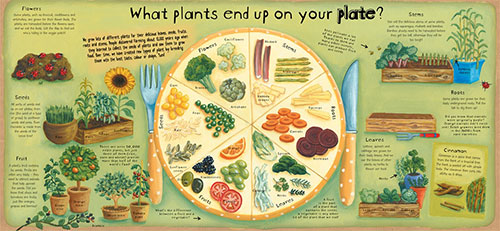
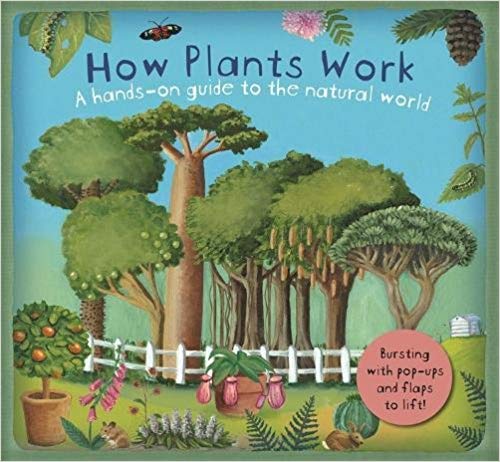
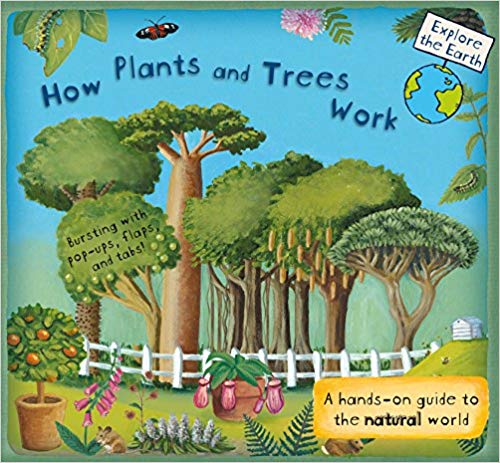
What’s the most poisonous plant in the world? Which flower smells like a dead horse? Which plant feeds on rats’ droppings? Find out in this hands-on exploration of the wonderful world of plants. Meet some of nature’s marvels, from the tallest tree to the smallest flower, from the toughest survivors to the most bizarre-looking blooms. Exploring with pop-ups, flaps and spinning wheels, you will never see plants in the same way again!
Age 7 to 12.
Scroll down to see more spreads from the book